March 19th, 2026

This release is all about making the platform feel smoother, clearer and easier to use. Following user feedback, we’ve refined assessments and analytics to surface more meaningful insights, improved navigation so you can move around with less friction and given admins more control over managing users. Along the way, we’ve also made a host of small UI improvements and fixes to help everything feel more intuitive and reliable.
If you have any feedback or feature requests, let us know at https://support.melo.health/
Added bulk user deletion for admins, including mobile-friendly bulk actions
Introduced the ability to re-invite inactive users (individually or in bulk) from the users table
Added “Last logged in” to the user table for better visibility into adoption
Captured job titles during onboarding and account completion for more consistent role data
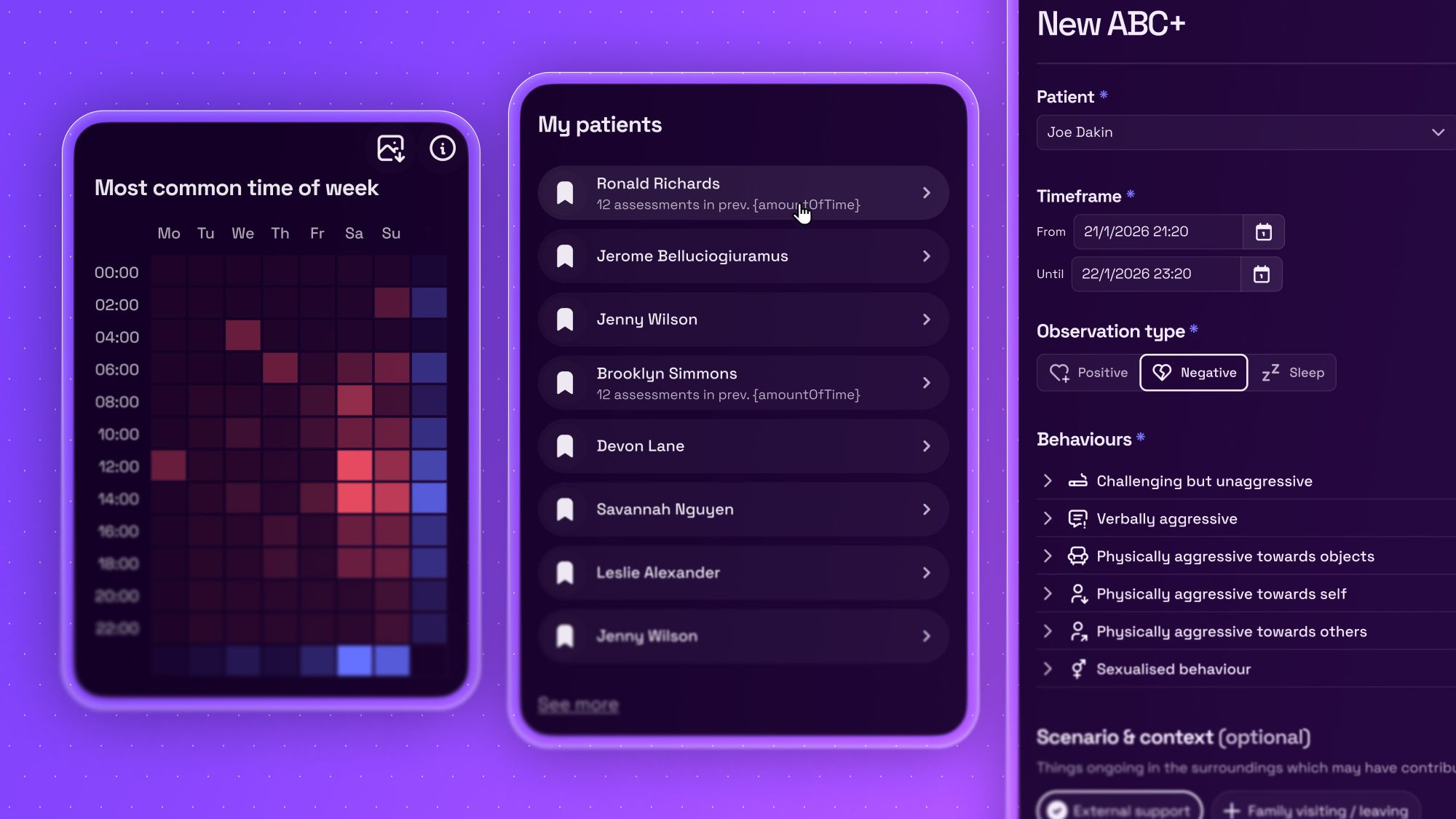
Bookmarked patients are now visible on the homepage for quicker access
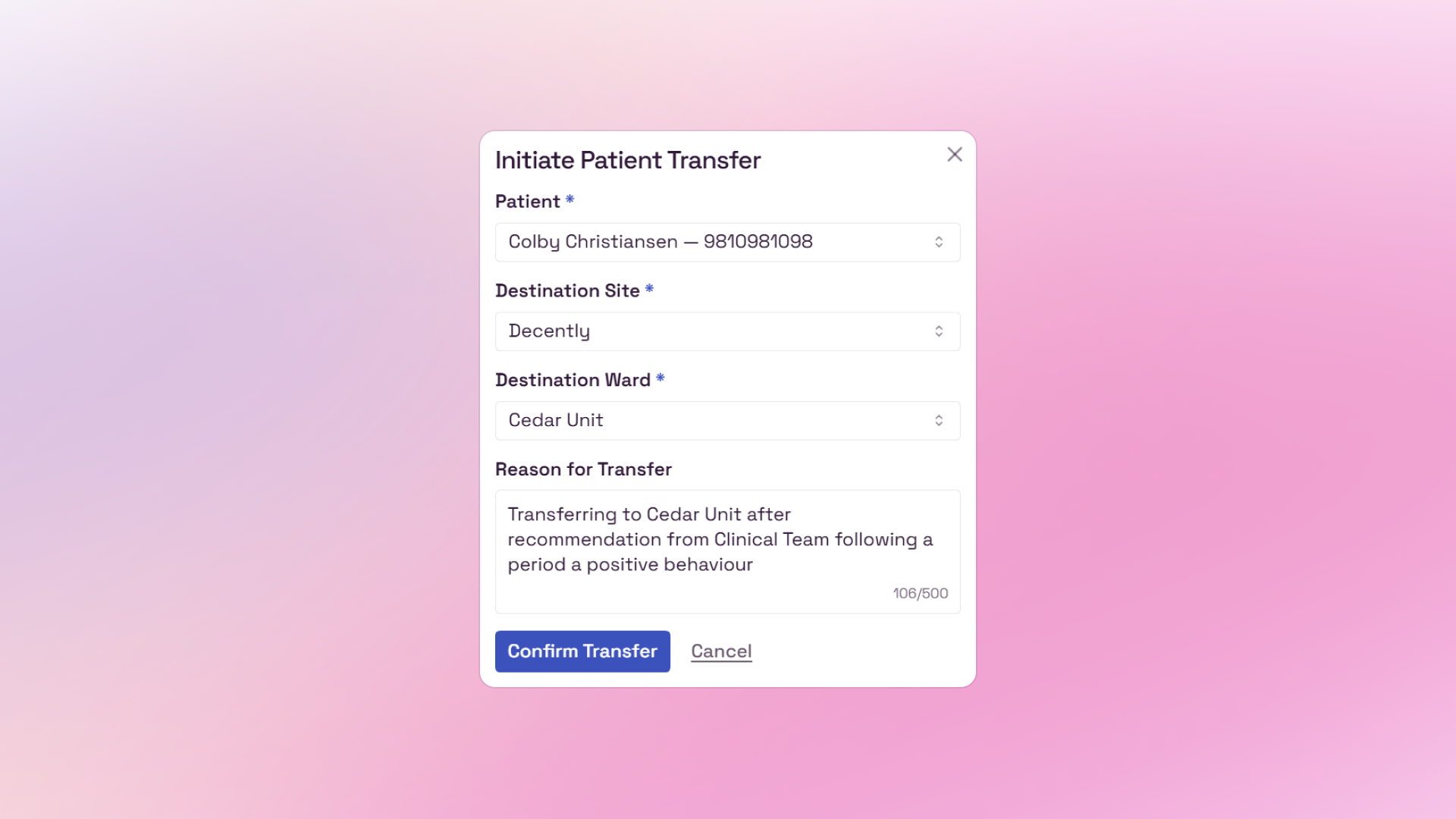
Made ‘ward’ a required patient field to improve reporting and segmentation
Removed the “Created At” field from ‘Patient Overview’ to reduce confusion with admission time
Fixed discharged-patient 404 by hiding edit/add actions where no longer applicable
Added submission time visibility to the ABC+ assessment list with improved sorting alongside observation start
Renamed “Time of behaviour” to “Observation start” across ABS and ABC+ assessment lists
Increased ABC “Other comments” character limit to 2500
Simplified the assessment review page for easier scanning:
Cleaner behaviour summaries
Improved labels
Better restraint/comments formatting
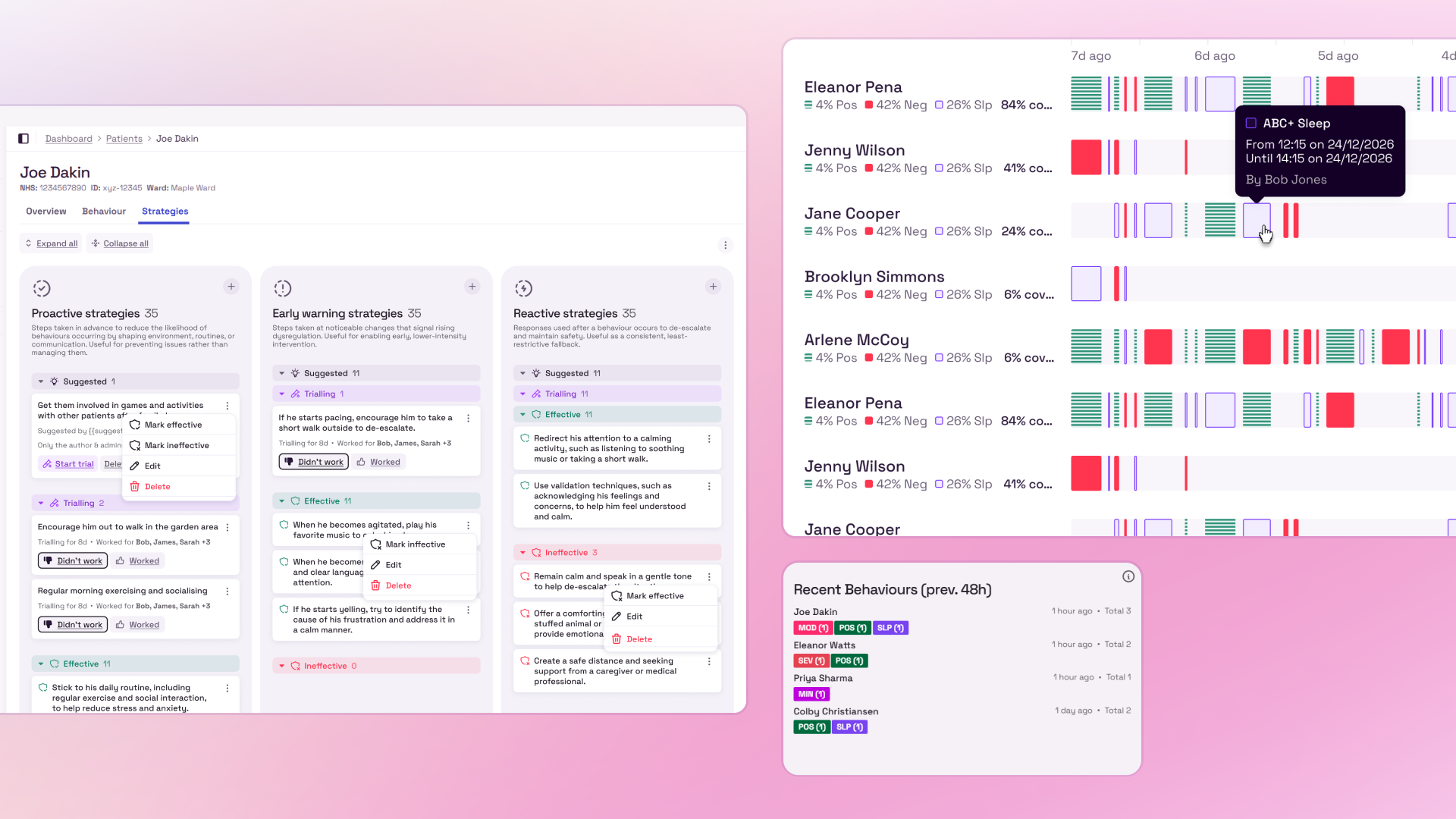
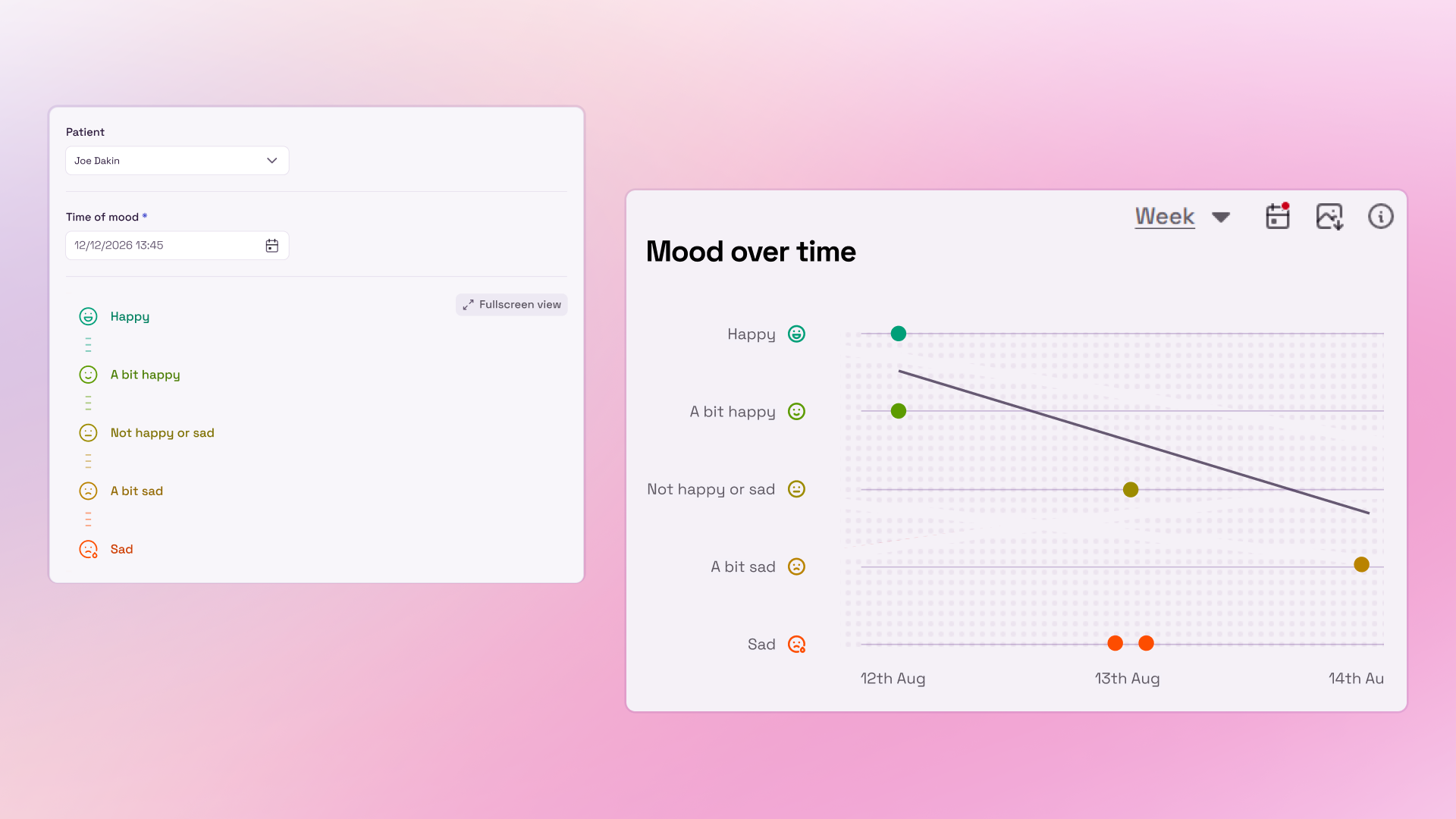
Added positive ABC+ data to the “Behaviour over time” graph, including:
Positive frequency tracking
Updated legends
Refreshed callout cards
Introduced percentage values on bar charts for better context alongside counts
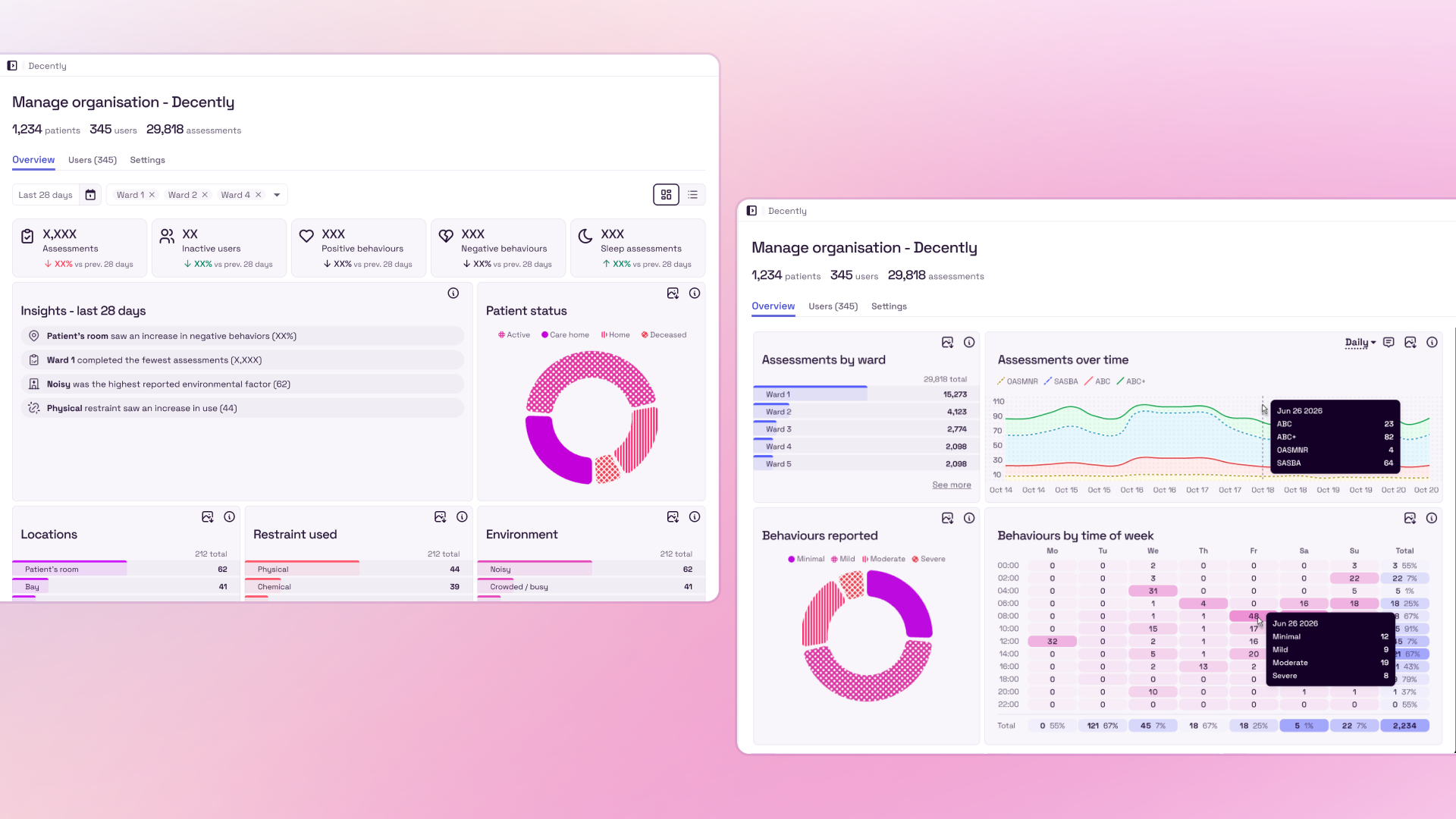
Added week-on-week behavioural hotpoints as a reusable heatmap component
Improved breadcrumbs and navigation flow
Framework switcher now preserves active tab
Faster tab responsiveness
Improved ‘Care Tip’ usability with:
Clearer vote states
Better cursor feedback
Tidier spacing
Fixed the backwards date-range picker so time flows in the expected direction
February 12th, 2026

This release strengthens Melo’s clinical frameworks, improves the reliability of underlying data, and makes patterns easier to see in day-to-day practice, while quietly removing points of friction that slow teams down.
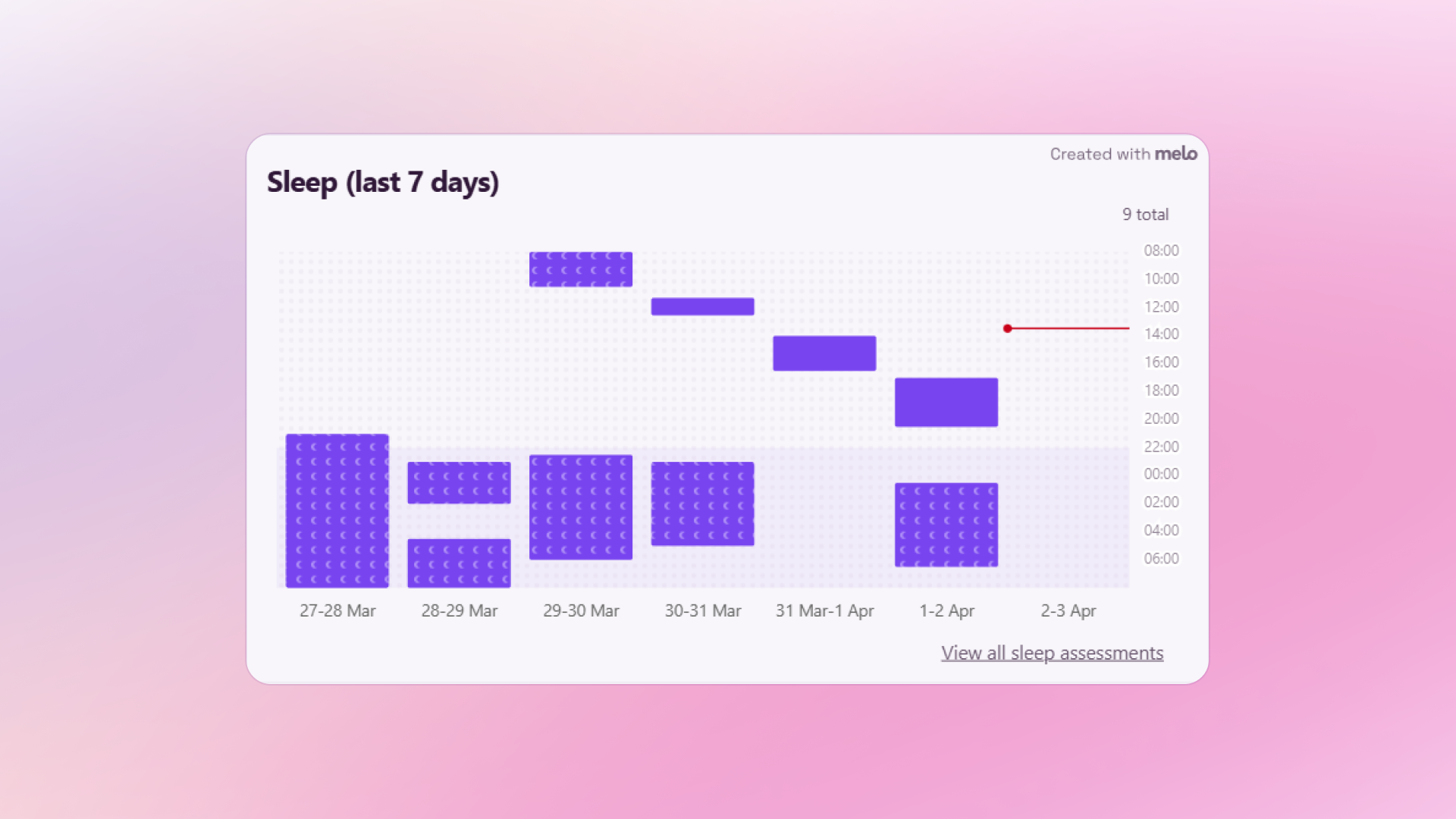
🧠 ABC+ evolves the existing ABC model with added coverage of positive behaviours and sleep, supporting more complete clinical formulation
📃 Report generator added onto the patient profile to summarise all of a patient’s data into a single PDF for sharing.
🧩 Questions and answers inside forms are now extendable (on request) allowing measures to evolve over time without breaking historic data or practice
✍️ Character-limits have been increased on free text firlds to allow richer clinical context where nuance matters
🪢 “Restraint” options have clearer descriptions, improving consistency and reducing ambiguity in reporting
🏷️ “Ward” is now a required field for patients to force grouping of patients and improve top-level reporting and filtering
🔁 No longer able to add a patient with an existing NHS or external ID to reduce duplicate records
🔥 New behaviour “time-of-week” heatmaps to replace “day-of-week” and “time-of-day” barcharts
🧭 Patient profile tabs and navigation have been refined for faster navigation
🏠 New homepage provides clearer orientation and quicker access to key actions
✉️ Email invites can now be re-sent, removing a common friction point during onboarding
👤 user job-title now captured to help us better understand different types of users
🛠️ Backend infrastructure has been strengthened through migration to AWS, alongside penetration testing, load testing, and an updated DCB0129 to support safety, scale, and assurance
August 20th, 2025

🚀 This release levels up both data clarity and assessment workflows, giving you sharper insights and more control over how you explore behaviour trends.
📈 Combined behaviour score – A new trend line on OASMNR and SASBA charts that multiplies frequency × severity, giving you a single, powerful view of change over time (and still easy to break down for deeper analysis).
📝 Behaviour descriptions in assessments – OASMNR and SASBA entries now support rich behaviour descriptions, adding nuance and clarity beyond the raw scores.
📅 Filter assessments by date range – Zero in on exactly the timeframe you need with new flexible filtering on the assessment list.
🤖 AI Summariser (BETA) upgrades – Improved performance and accuracy make summaries faster, clearer, and more reliable.
📊 Refined ABC timeseries – “Weighted” has been removed for a truer representation of the data.
June 18th, 2025

📈 This release brings a number of visual and functional upgrades to the patient profile, helping you work more clearly and efficiently across your assessments.
🖥️ Full-width graphs on larger screens - The behaviour over time charts now make full use of your screen - giving you more space to explore the data, especially on desktop and widescreen monitors.
📇 New patient metadata card - All key patient info - name, DOB, NHS ID, ward, tags, creation date - is now grouped in a single card at the top of the profile. Easier to read, quicker to edit.
🥧 Spread of severity (ABC and ABS) - Quickly understand the breakdown of behaviour type and severity with new visual pie charts now added to both the ABC and ABS frameworks.
🐛 Hotfix for graph exports - A quick fix to address a display issue affecting some exported graphs - everything should now render as expected.
We will be taking a break from feature development for the next few weeks as we turn our attention to some work behind the scenes - designed to improve how Melo works and scales for the future. Watch this space for more updates soon!
June 16th, 2025

🧠 New stats cards on behaviour over time graphs – each chart now includes headline stats: total number of assessments and a snapshot of the most recent behaviours
🔒 Restraint over time (ABC assessments) shows how often restraint has been used on a patient over a timeframe
🔒 Most common restraint (ABC assessments) shows which restraint techniques have been used most frequently with a patient
June 11th, 2025

This release is all about improving how you view and interpret behaviour trends – plus a few helpful tweaks behind the scenes.
🎯 New filters in ABC view – behaviour type and severity filters added to the ABC section of the patient profile
🧹 Tidied up user flow after submitting assessments - you’ll now be navigated back to that patients trends tab
🎯 ABS’s in the assessment list now shows the observation-end time to match up with it’s Behaviour over time graph
🧪 More improvements coming soon!
May 5th, 2025

This release introduces a completely redesigned side navigation menu – the biggest visual change to Melo in recent months. It’s cleaner, faster, and built to scale as we continue adding new features.
🧭 New Side Navigation – rethought from the ground up to give clearer access to patients, assessments, insights, and settings
🌙 Dark Mode has arrived – switch via the user menu; ideal for low-light settings
📊 Graph upgrades – view absolute values alongside percentages, improved layout on patient profiles, and fullscreen mode for selected charts
⌨️ Efficiency wins – new hotkey combos to launch assessments faster, and an easier way to record multiple OASMNRs and SASBAs in one go
💻 ‘Download app’ option – added to the user menu for quick desktop access
🖼️ Smarter image handling – copy images to clipboard and rename chart image files before downloading
⚙️ Minor improvements & bug fixes – default behaviour time improved for more accurate assessments, and NHS number field now properly restricts invalid characters
🧱 This update lays groundwork for upcoming features – such as organisational-level dashboards and additional frameworks
April 17th, 2025
🛡️ Security enhancements – rolled out following our most recent external PEN test
April 17th, 2025
🕒 Fixed a date/time issue – caused by the change to British Summer Time
March 25th, 2025
🧪 New ‘AI beta testing’ role type – added for future clinical testing of upcoming AI-powered features